A wall usually marks a boundary. It separates one place from another and tells us where we can go. But when someone paints on it, that same surface becomes a place of encounter. A face interrupts our walk. A name demands our attention. Colors give an otherwise ordinary stretch of concrete a presence of its own.
These four photographs, taken at Ateneo Katipunan, explore how graffiti can make identity visible and invite reflection on the country we share. Their figures and lettering do not offer a single, straightforward statement. Instead, they ask us to consider who gets to be seen, how people express themselves, and what concerns we bring to the act of looking.
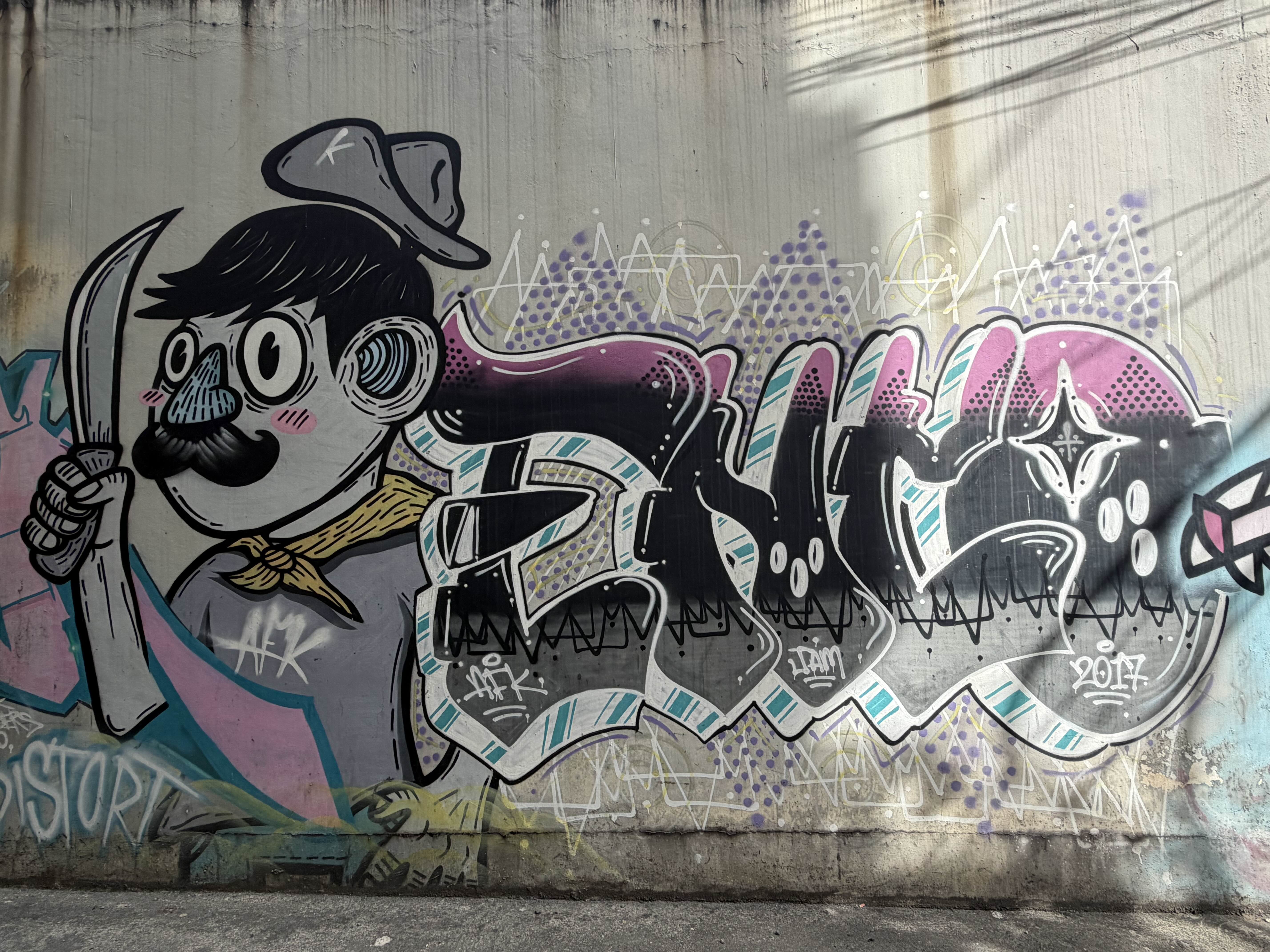
Presence in paint.
The first photograph combines an exaggerated cartoon figure with large, outlined letters. Pink and turquoise brighten the gray surface, while black shading gives the lettering weight. Smaller marks surround the main composition. Together, these elements make the wall feel occupied by a recognizable visual personality.
Identity here can be read through style: the choice of color, the shape of a letter, or the humor of a face. Even when a passerby cannot decipher every word, the work still announces a presence. It suggests a desire to contribute something distinctive to a place that many people pass through.
This raises a question relevant to our country: whose creativity receives space and attention? The photograph does not tell us the artist’s background or whether the work was commissioned. It does, however, invite us to recognize expression beyond the settings where we usually expect to find art.
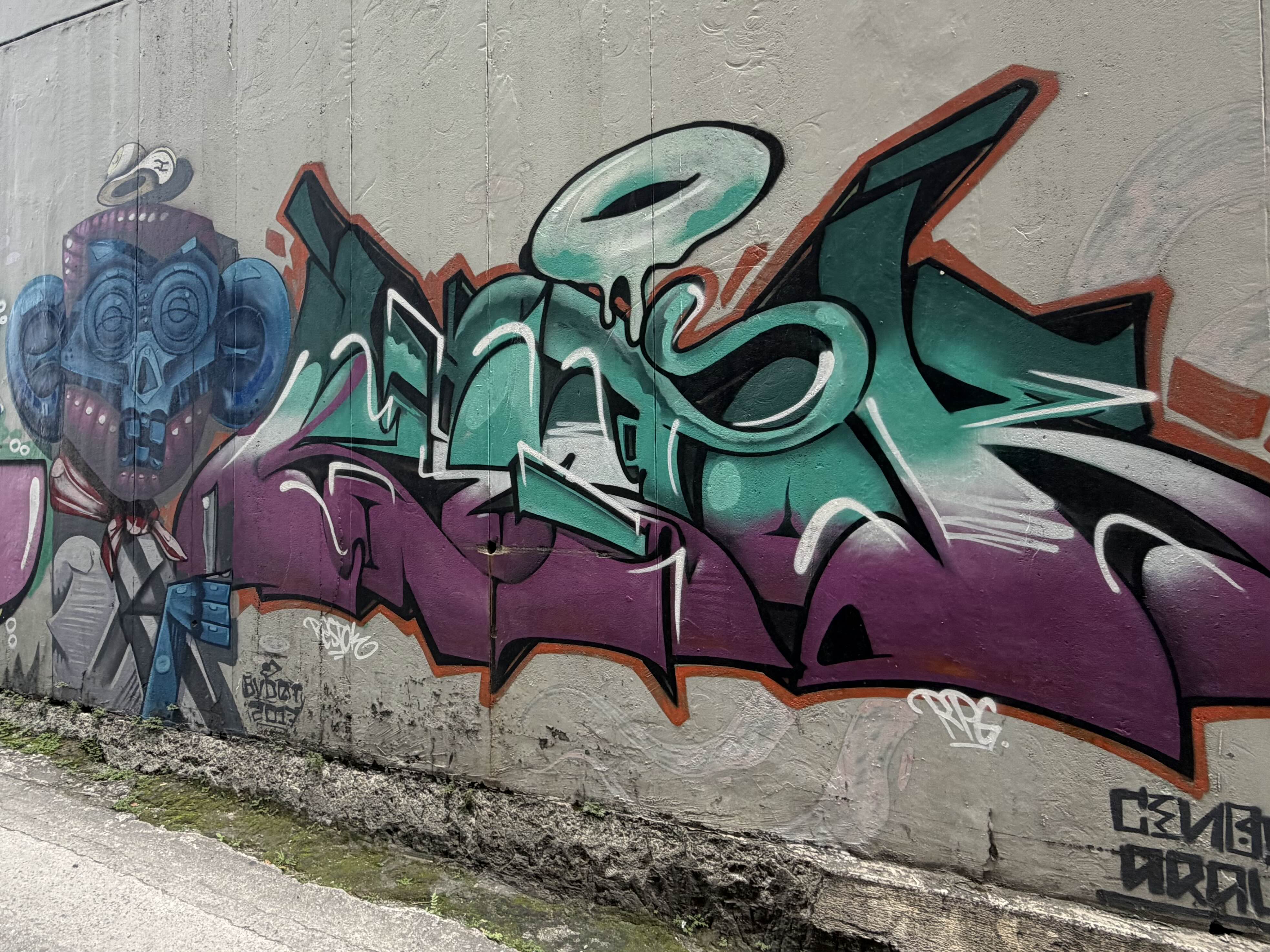
Being seen. Being heard.
In the second image, a mechanical-looking figure stands beside sweeping green and purple forms. Circular features on the face contrast with the pointed edges of the lettering. White highlights and an orange outline separate the painted forms from the pale wall.
The circles can resemble speakers or listening devices, creating a possible connection to sound and communication. This is an interpretation of the image, rather than a confirmed explanation from its maker. It offers a useful way to ask whether visibility is enough: if a person leaves a mark in public, will anyone take time to understand it?
Applied to conversations about the Philippines, that question becomes one of participation. People communicate their opinions in different ways, and unfamiliar expression can be easy to dismiss. This wall invites a slower response—attention before judgment, and curiosity before assuming that we already know what someone means.
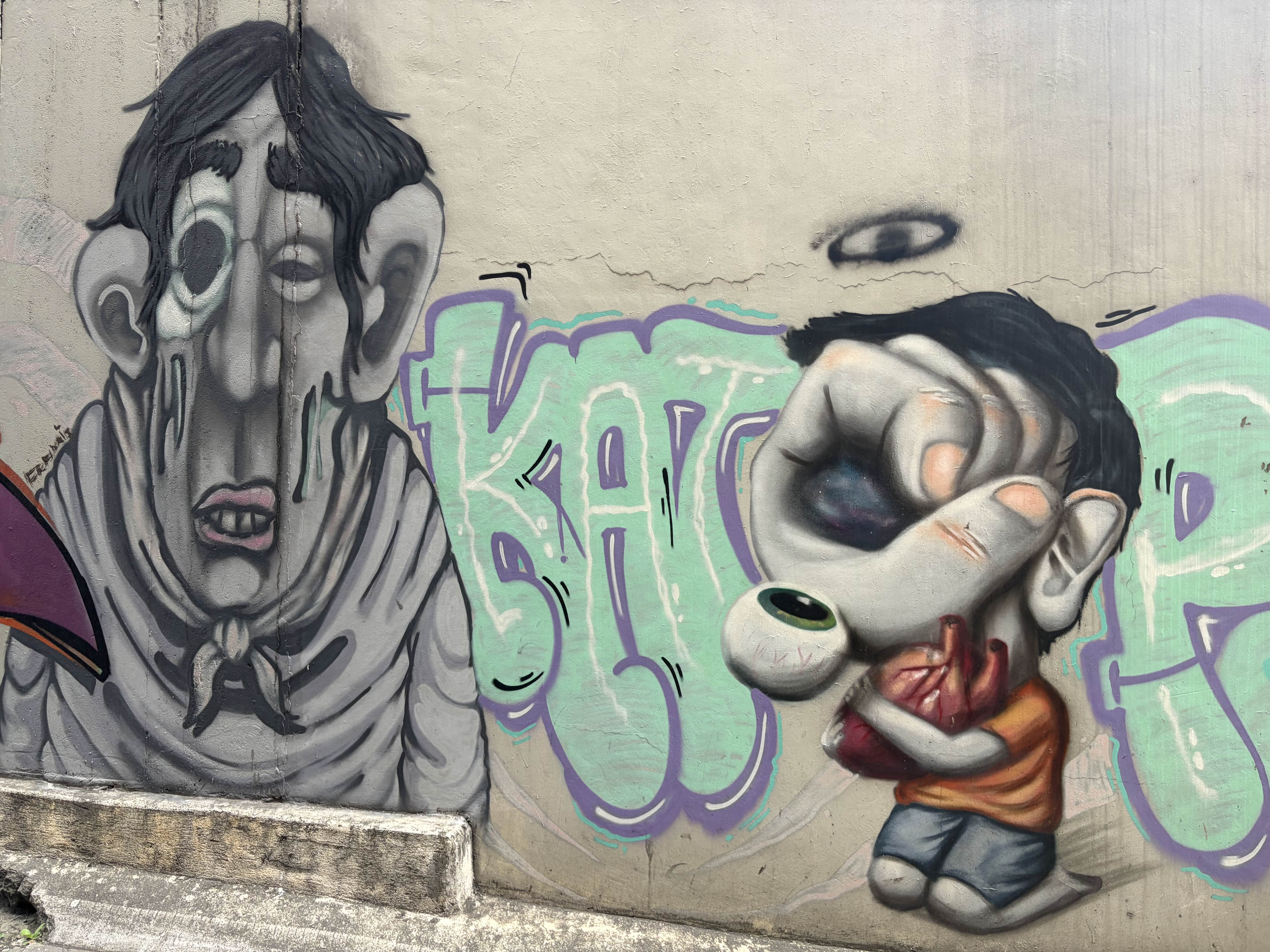
What a face can carry.
The third photograph shifts the mood. A long gray face occupies the left side, while a smaller figure appears beside an enlarged hand, an eyeball, and a red heart-like form. The mint and purple background is bright, but the fragmented bodies create an unsettling contrast.
One possible reading is that these distortions make vulnerability visible. The eye suggests looking or awareness; the heart-like form suggests feeling; the hand around the head can suggest pressure or restraint. Their separation makes the figure appear caught between what it sees, what it feels, and what it can express.
For a viewer thinking about our country, this can open a discussion about feeling unheard, carrying social pressures, or struggling to put concern into words. The image alone cannot establish a reference to a particular event or policy. Its value in this essay lies in the questions it makes possible: what burdens remain unseen, and how do we respond when someone gives those burdens a visible form?
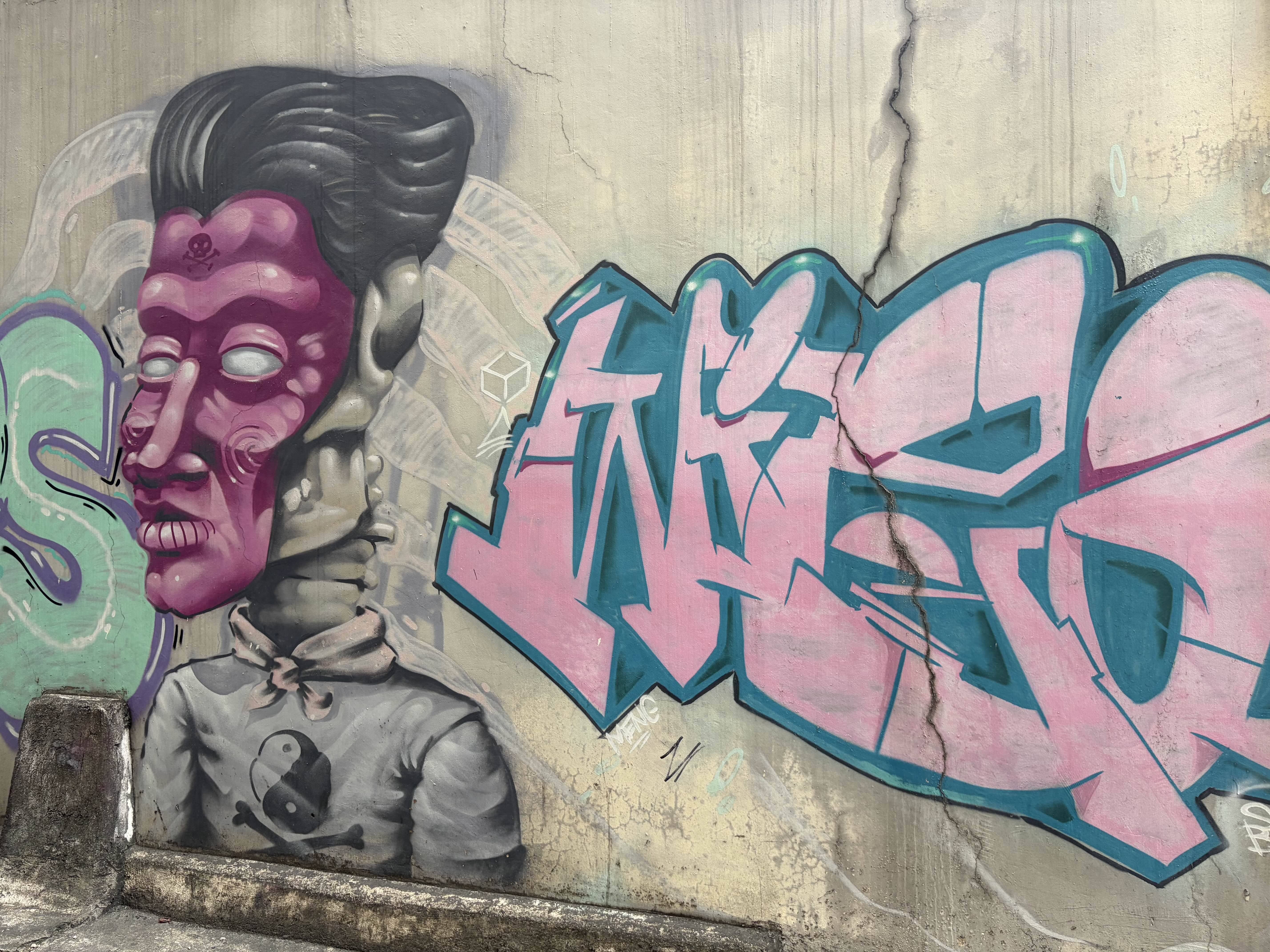
Behind the painted face.
The final photograph centers on a figure whose magenta face looks almost like a mask. Its pale eyes and small skull-and-crossbones symbol introduce tension into an otherwise colorful composition. Beside it, pink letters edged in turquoise fill much of the available space.
The contrast between the vivid face and gray body can be read as a difference between outward appearance and an inner life we cannot easily see. The skull symbol adds a suggestion of danger, although its exact meaning remains uncertain. These details encourage us to question appearances without pretending that every symbol has only one explanation.
The wall’s cracks add another layer to the photograph. They cross the artwork regardless of its design, reminding us that public expression exists on a physical surface exposed to change. As a metaphor, that fragile surface can prompt reflection on the care a shared community requires. It is a connection made by the viewer, not evidence that the artist intended a specific political message.
A shared space.
More than one voice.
Across these photographs, identity appears through distinctive styles, expression takes shape through color and lettering, and concern emerges through figures that feel uneasy or vulnerable. The walls invite interpretation while leaving parts of their meaning unresolved.
That uncertainty matters. None of these photographs shows an unambiguous slogan about a national issue. Connecting them to concerns for the Philippines therefore requires care: we can ask about voice, recognition, and belonging without assigning the artists opinions they have not stated.
For me, “Walls That Speak” begins with that act of attention. Caring about our country includes noticing the people who shape its shared spaces, taking their expressions seriously, and remaining willing to listen. A painted wall cannot speak for everyone. It can still make us pause long enough to ask who has been speaking—and whether we have been paying attention.